Accurate monitoring of crop nutrient contents plays a key role in sustainable and efficient agriculture. Traditional laboratory-based methods, however, are often slow, destructive, and poorly suited for tracking nutrient concentration throughout the growing season.
In the Hyper-näring project, researchers at the Swedish University of Agricultural Sciences (SLU) are working to overcome these limitations by combining advanced agronomic research with Specim’s hyperspectral imaging solutions, enabling non-destructive nutrient analysis from controlled laboratory conditions to real-world field environments.
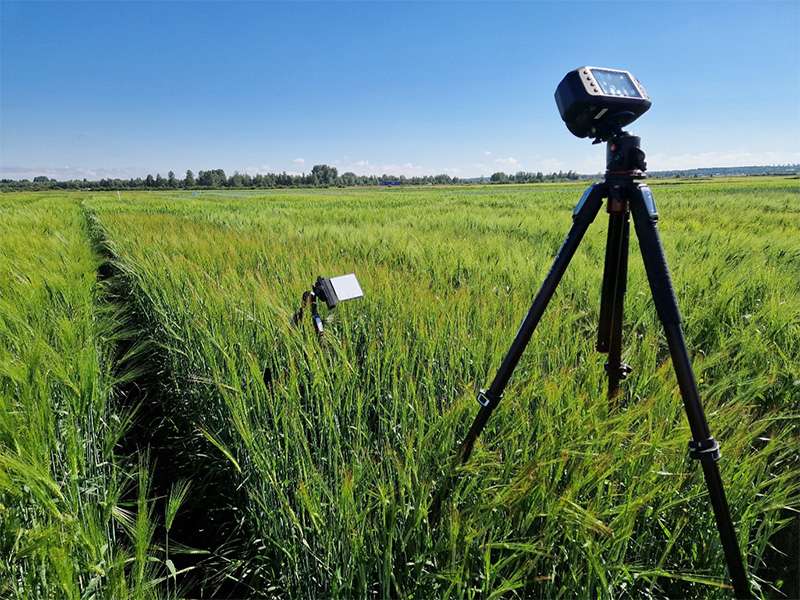
Image 1. Acquiring images with the mobile Specim IQ in the field. From these images, we can extract canopy-level reflectance values.
Conventional nutrient analysis relies heavily on destructive sampling and time‑consuming laboratory workflows. While accurate, these methods limit how frequently measurements can be taken and make it difficult to observe how the concentrations of multiple nutrients change over time. SLU’s research focuses on developing an approach that allows repeated, non-invasive measurements across growth stages, while maintaining consistency between laboratory experiments and field trials.
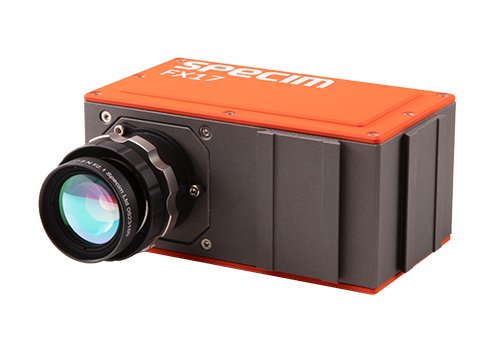
Hyperspectral imaging provides the foundation for this work by capturing detailed spectral information from plants across hundreds of wavelength bands. To support the full research workflow, SLU combines multiple Specim systems. High-resolution laboratory measurements are performed using the Specim FX17, while the portable Specim IQ enables flexible data collection outside controlled environments. Field measurements under real agricultural conditions are carried out using the Specim RS10 system.
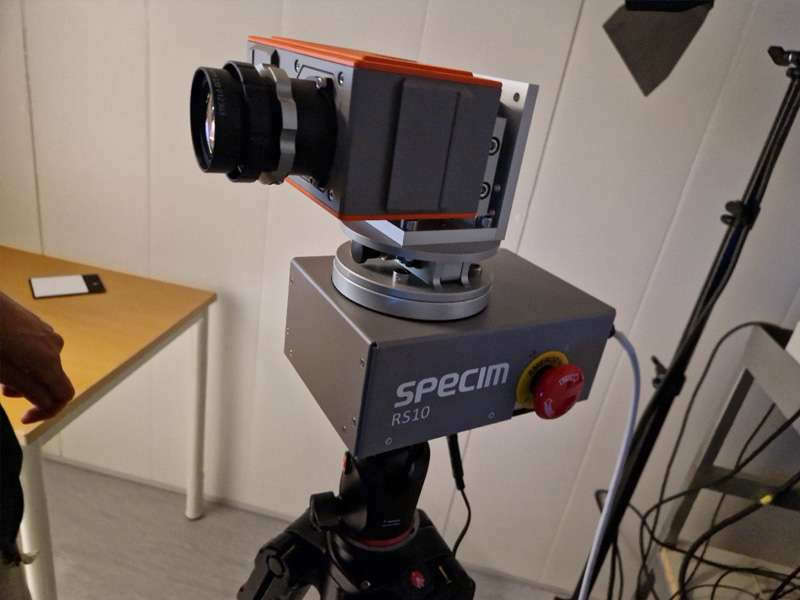
Image 2. Configuration of the FX17 camera for non-destructive measurements in both laboratory and field conditions. The FX17 was mounted on an RS10 system attached to a tripod, allowing us to capture images of plants in pots (in the lab or greenhouse) as well as in the field.
Together, these systems enable the collection of comparable hyperspectral data across environments – an essential requirement for validating methods and scaling them toward practical applications.
“Specim’s hyperspectral systems allow us to monitor several nutrients simultaneously without destroying the plant material. This opens entirely new possibilities for understanding nutrient dynamics across growth stages,” says Julianne Oliveira, Principal Investigator of the Hyper-näring project at SLU.

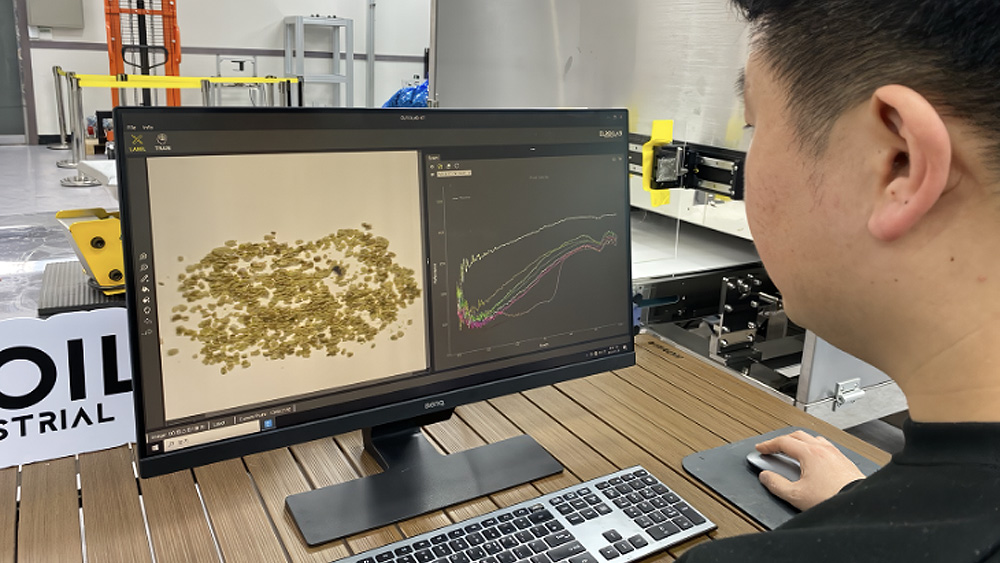
Image 3. Checking image quality and illumination conditions. After imaging the potted plants and harvesting the material, we additionally scanned the plant samples using the Specim FX17 with the LabScanner 40×20.
Early results from the project show strong potential to identify nutrient-related spectral features and track how plant nutrient concentrations evolve over time. Because hyperspectral imaging captures rich datasets rather than single-parameter measurements, the same data can be revisited as new research questions emerge – significantly increasing both efficiency and long-term scientific value.
Beyond nutrient analysis, hyperspectral data offers a broader perspective on plant health. The same measurements can support studies on crop stress, disease indicators, and biomass development, making hyperspectral imaging a versatile tool for precision agriculture and plant science. This capacity to extract multiple insights from a single dataset is particularly valuable for developing integrated crop monitoring approaches.
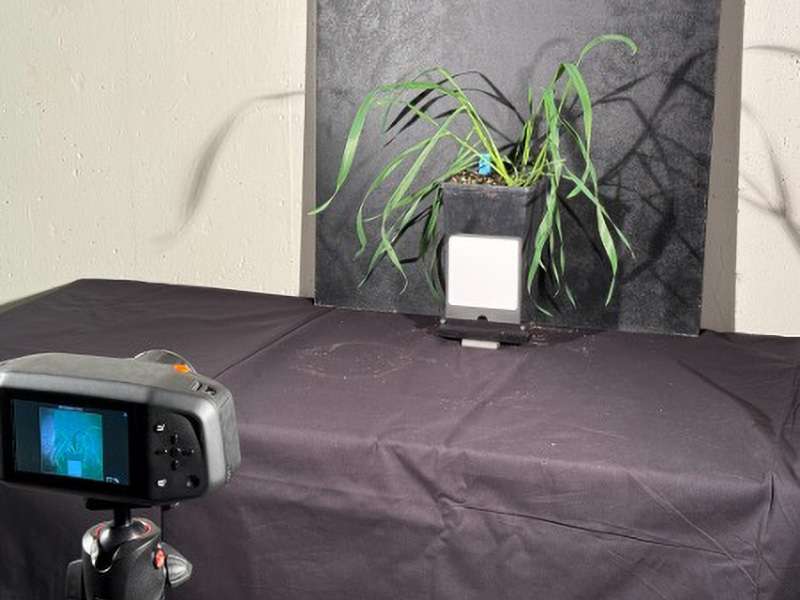
Image 4. Lab setup used to image plants in pots. The Specim IQ camera and its corresponding image are visible. The Specim FX17 was used under the same conditions, but mounted on the RS10. This ensured that both cameras captured images of the same plant under identical conditions.
Although Hyper-näring is rooted in scientific research, its implications extend beyond the laboratory. By demonstrating that hyperspectral imaging can be applied consistently from controlled experiments to real field conditions, SLU’s work lays the foundation for future on-farm diagnostic tools and data-driven nutrient management.
Specim’s hyperspectral imaging solutions support this transition by providing the accuracy, portability, and flexibility needed across the entire research-to-field continuum.
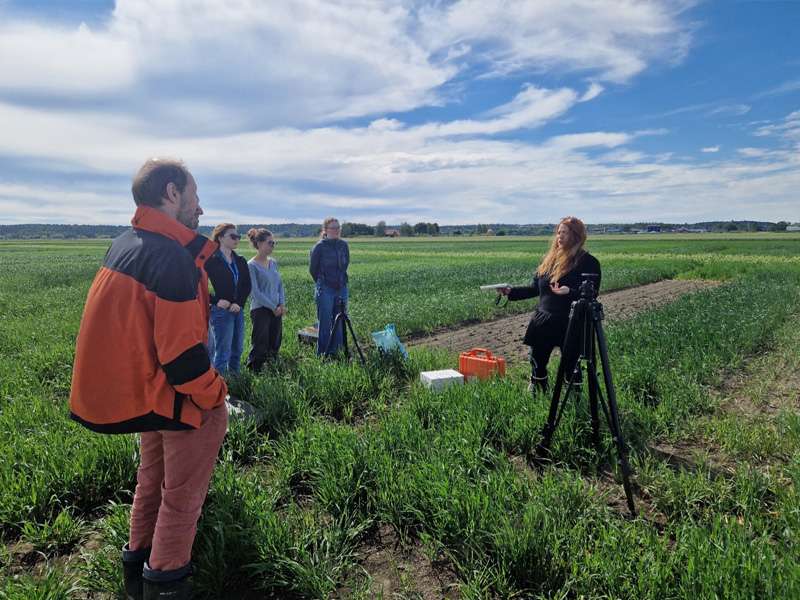
Image 5. Project workshop in Uppsala 2025, where we demonstrated and tested the cameras under field conditions. We also discussed field experiment design and data collection protocols.
Exploring hyperspectral imaging for your applications?
Whether your focus is crop research, precision agriculture, or plant phenotyping, Specim’s hyperspectral imaging solutions enable reliable, non-destructive analysis across environments – from laboratory studies to field deployment.