Low-density foreign bodies such as plastic fragments remain one of the toughest challenges in food production. In minced meat lines—where products like hamburgers and sausages are made— small pieces of plastic can slip through unnoticed. Traditional inspection systems such as RGB, X-ray or metal detectors often fail to catch them, creating costly risks for food producers and, more critically, potential threats to consumer safety.
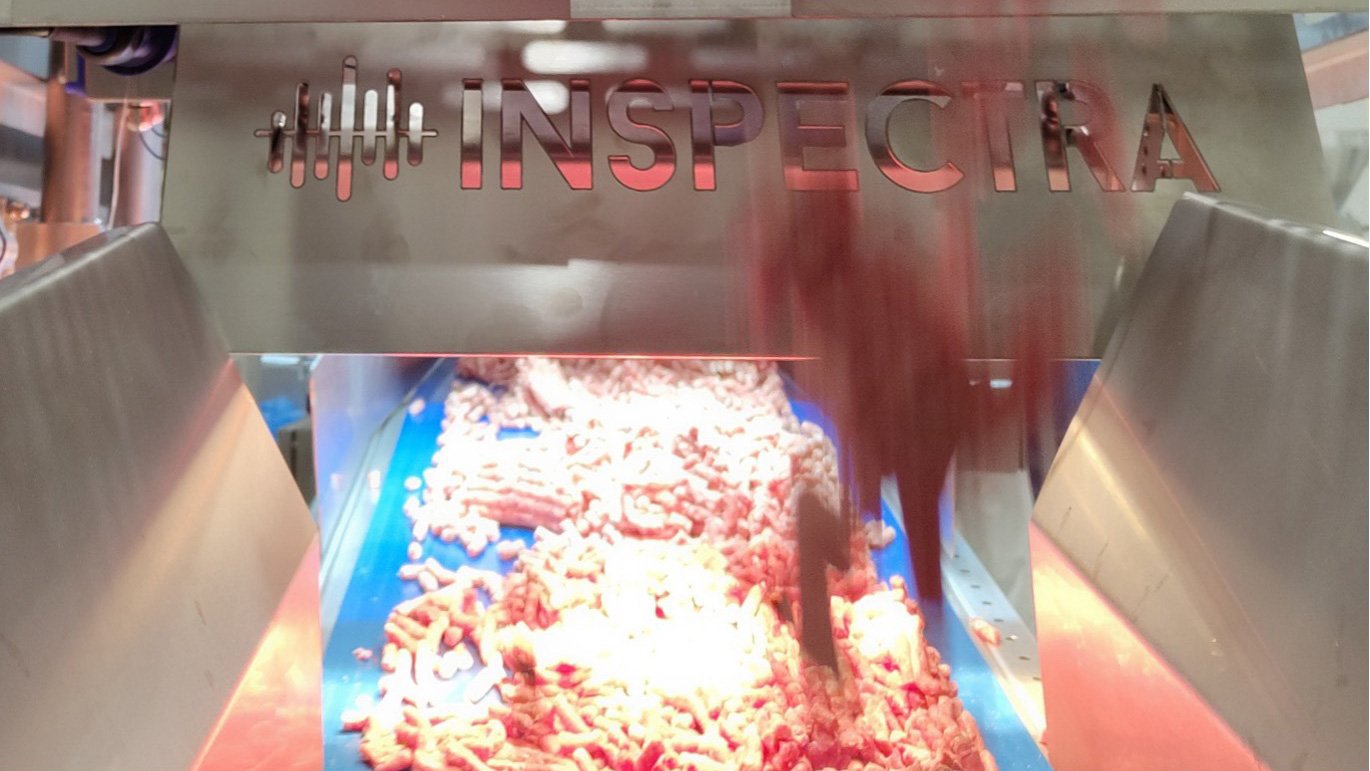
Image 1: Hyperspectral inspection can reliably detect low-density foreign bodies, such as plastic, on the surface of minced meat.
Food producers need a robust and reliable solution to identify plastics and other low-density contaminants before products reach packaging or distribution. If missed, these contaminants can cause serious consequences, including:
- Food safety issues – potentially dangerous foreign bodies in consumer products
- Batch rework and downtime – lost yield, cleaning, and production interruptions
- Higher operational costs – wasted raw materials and additional labor
- Brand risk – damaged trust and reputation if contaminants reach consumers
Traditional inspection technologies are fundamentally limited because they rely on density or conductivity. As a result, plastics and other low-density materials remain practically invisible. Until now.

Image 2: Example of real-case detection of blue plastic fragments in minced meat production using hyperspectral imaging.
To address this challenge, INNDEO, a Spanish machine vision equipment and food inspection machinery manufacturer, integrated Specim’s hyperspectral imaging (HSI) technology into their INSPECTRA BULK INSPECTOR industrial equipment.
By combining high-resolution hyperspectral cameras with AI and digital analytics, INNDEO delivers a novel solution for detecting low-density contaminants in minced meat. This robust platform, supported by INNDEO’s technology called INSPECTRA CHP®, helps food producers to improve safety, reduce waste, and optimize production processes.
Hyperspectral Imaging Reveals Invisible Contaminants
Hyperspectral imaging (HSI) captures the full reflectance spectrum at every pixel of an image. Each material has a unique spectral fingerprint, determined by its molecular composition, that remains consistent regardless of its density, shape, or color.
Unlike traditional inspection methods that rely on visual properties such as color and shape (RGB), physical properties such as density (X-ray) or conductivity (metal detectors), HSI analyzes this spectral information to distinguish between different materials.
As a result, even visually similar, low-density contaminants—such as plastic fragments— organic matter, and even subtle quality deviations can be reliably detected on the surface of food products based on their unique spectral signature.
Combining Visible and Near-Infrared Imaging for Comprehensive Food Inspection
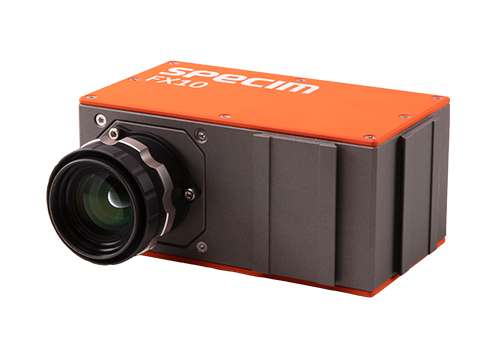
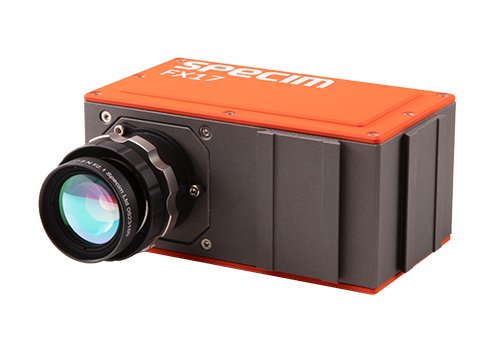
INNDEO complements its solution with the Specim FX10 (400–1000 nm) and Specim FX17 (900–1700 nm) hyperspectral cameras, each designed to detect specific contaminants and product quality parameters. Together, these cameras provide complementary insights—combining detailed surface analysis with molecular-level detection to deliver comprehensive food inspection capabilities.

Image 3: Specim FX10 and FX17 hyperspectral cameras
- Specim FX10 works in the visible range (400–1000 nm), capturing details much like the human eye – but with far greater precision. It highlights subtle differences in surface appearance, fat-to-lean ratios in meat, and certain types of contamination like plastics.
- Specim FX17 operates in the near-infrared range (900–1700 nm), revealing the molecular information invisible to the human eye. It can separate meat from plastics, detect moisture and protein levels, and uncover foreign objects or impurities that would otherwise go unnoticed.
“With Specim’s hyperspectral technology embedded in the INSPECTRA BULK INSPECTOR, we are able to detect most plastic foreign bodies on the product surface, as well as other quality issues, by comparing their spectral signatures.”
— Emilio J. de la Red Bellvis, Chief of Innovation & Business Development, INNDEO
Pixel-Level Precision and Real-Time Performance for Industrial Inspection
Specim’s hyperspectral cameras deliver pixel-level accuracy, broad spectral coverage, and high-speed inline acquisition, ensuring precise and reliable contaminant detection at full production scale. These features enable high-throughput inspection in demanding industrial environments without sacrificing detection performance.
- High-resolution hyperspectral images – small fragments on the surface can be detected and separated at the pixel level
- Broad spectral coverage with a high number of bands – enables robust classification across different plastic types and other quality parameters
- Fast image acquisition speed – keeps pace with conveyor belt speeds, allowing real-time inline decisions
Augmenting Detection with AI and Data Integration
For specific applications, INNDEO enhances the capabilities of their hyperspectral solution by combining it with proprietary artificial intelligence systems:
- INSPECTRA CHP®: Hyperspectral processing unit
- INSPECTRA Easy AI®: AI-assisted classification and detection
In some cases, AI is applied directly to the VNIR/SWIR spectrum, and others to the chemical images generated. Additional visible-spectrum cameras are used in parallel, increasing the range and sensitivity of the inspection system. Furthermore, INNDEO digitizes all production and quality data, allowing clients to:
- Apply business intelligence (BI) techniques
- Evaluate supplier quality
- Identify inefficiencies in the production process
Operational Benefits of Hyperspectral Imaging
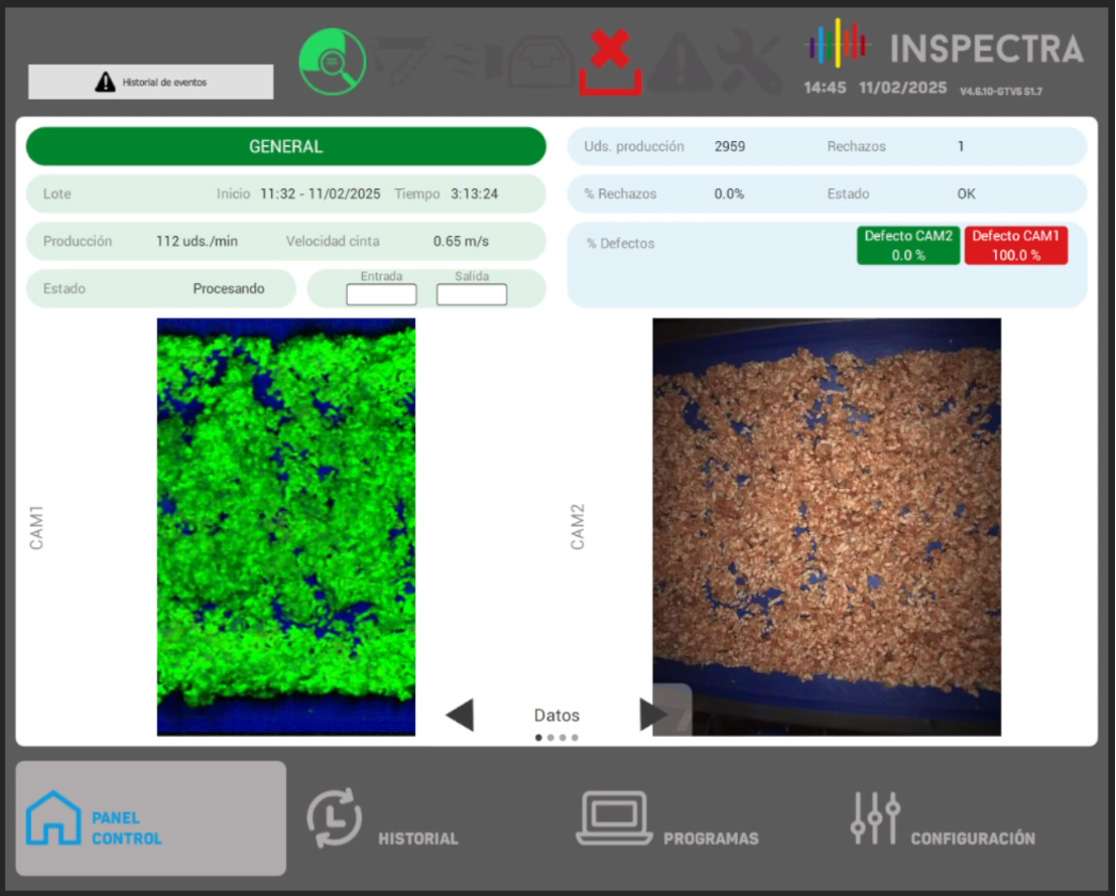
Image 4: Example of a real-time inspection interface using hyperspectral imaging for minced meat inspection.
The integration of Specim’s hyperspectral cameras into the INSPECTRA food inspection system delivers multiple operational benefits:
- Increased food safety through improved foreign object detection
- Improves product quality through enhanced inspection of quality deviations
- Lower operational costs through reduction of manual inspection tasks
- Faster identification of root causes through data analytics and BI integration
“Food producers see this machine not only as a powerful tool for food safety and quality control, but also as a way to optimize their entire production process—improving efficiency, reducing waste, and protecting their brand.”
— Daniel Artal, Technical Director, INNDEO
Trusted Expertise in Hyperspectral Imaging Integration
INNDEO has collaborated with Specim since 2018. According to Mr. de la Red Bellvis, Specim’s global reputation, technical expertise, and continued support in integration have been decisive factors in choosing them as a technology partner.
“Specim is the right partner in the HSI vision equipment, as they have played a key role in the successful integration of hyperspectral technology in industrial equipment for many applications,” de la Red Bellvis says.
Specim’s HSI cameras are also widely used by research institutions and other machine vision manufacturers, further reinforcing trust in their performance and reliability.