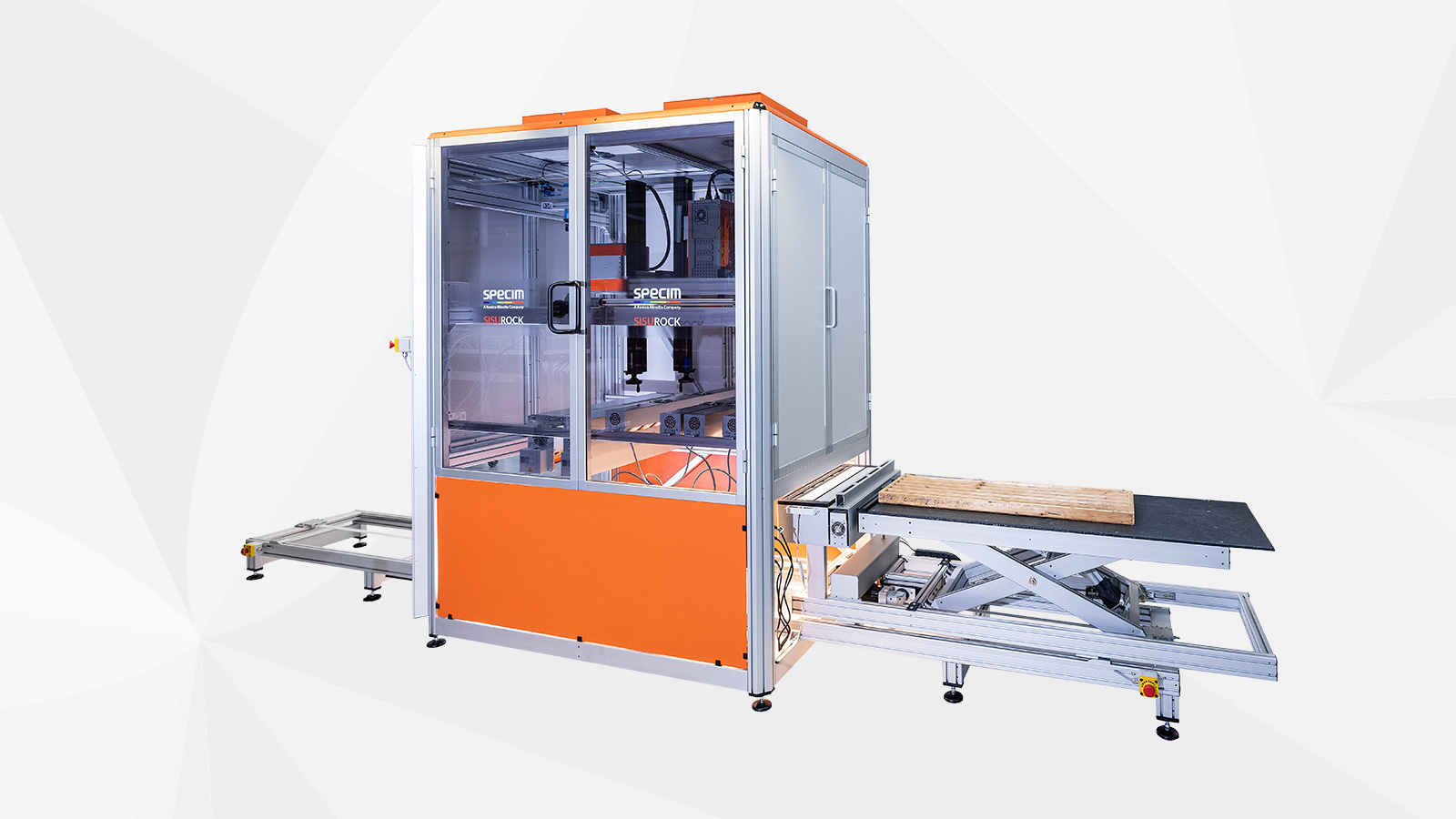
Black plastics are widely used in automotive components, electronics, packaging, and many other products. However, identifying and separating black plastics by polymer type is particularly challenging for automated recycling and sorting systems.
Many conventional optical sorting systems operate in the near-infrared (NIR) spectral range. While NIR technology can effectively identify many polymers, carbon black pigments commonly used in black plastics strongly absorb NIR light. As a result, there may not be enough reflected spectral information to reliably identify polymers.
Mid-wave infrared (MWIR) hyperspectral imaging provides an alternative approach. By operating at longer wavelengths, MWIR imaging can reveal spectral features that enable identification and classification of different black polymers.
Why Are Black Plastics Difficult to Sort?
Automated plastic sorting depends on identifying the material moving along a conveyor and separating it into the appropriate stream.
For many plastics, NIR spectroscopy provides characteristic spectral information that can distinguish polymer types. Black plastics containing carbon black are more challenging because the pigment absorbs much of the NIR radiation directed at the material.
Consequently, conventional NIR-based optical sorting systems may struggle to classify black plastic objects, limiting their ability to separate them accurately by polymer type.
The challenge is therefore not simply detecting that an object is present. The sorting system needs sufficient information about its material composition to determine where it belongs.
Why MWIR Hyperspectral Imaging?
Moving from NIR to the mid-wave infrared region provides access to different spectral information.
In the MWIR range, polymers exhibit characteristic spectral features related to their molecular composition. Carbon black absorbs less strongly in this region than in NIR, making it possible to obtain useful spectral information from many black plastic materials.
Different polymers exhibit characteristic spectral features in the MWIR range. The interactive chart below shows how the reflectance spectra of eight common polymers differ across wavelengths, providing information for material classification.

Image 1. Reflectance spectra of eight different polymers measured in the MWIR wavelength range. Differences in their spectral characteristics can be used to distinguish materials through hyperspectral imaging. Source: Specim.
Independent research supports the potential of this approach. A study by researchers at Fraunhofer IOSB, published in Waste Management, directly compared NIR and MWIR hyperspectral imaging for the classification of post-consumer plastic waste. The study evaluated five common polymers — HDPE, LDPE, PET, PP, and PS — including both black and non-black samples.
For black plastics, the researchers reported a balanced classification accuracy of 83.4% using MWIR hyperspectral imaging, compared with 47.5% using NIR. The results demonstrate the advantage of moving to the MWIR spectral range when carbon black limits the spectral information available in NIR.
The study, “Black plastic identification by hyperspectral imaging in mid-wave infrared,” was published in Waste Management, Volume 209 (2026), article 115175.
Read the study: Fraunhofer research publication
Hyperspectral imaging adds another important capability: instead of measuring only selected wavelengths, the camera captures a spectrum for every spatial pixel. Classification algorithms can then use this spectral information to distinguish materials based on their characteristic spectral signatures.
The result is material information that can be integrated into automated machine vision and sorting systems.
Specim FX50 for MWIR Material Identication
The Specim FX50 is a line-scan hyperspectral camera designed for industrial imaging in the MWIR spectral range from 2.7 to 5.3 µm.

Image 2. Specim FX50 MWIR hyperspectral camera.
This spectral coverage provides access to characteristic absorption features of many polymers and enables the identification of materials that can be challenging for conventional NIR imaging.
For plastic and recycling applications, Specim FX50 can be used to distinguish materials including black and non-black plastics, different polymer types, and certain rubber materials, provided that their spectral characteristics can be reliably differentiated under the measurement conditions.
As a line-scan hyperspectral camera, the FX50 can be integrated into conveyor-based machine vision systems where materials are continuously imaged and classified.
Instead of relying on color or visible appearance, the system uses spectral information to determine material differences. This is particularly valuable when materials look similar to conventional imaging systems but have different chemical compositions.
From Material Identification to Automated Sorting
A hyperspectral camera provides the material information required by the machine vision system. In an industrial sorting installation, this information can be combined with classification algorithms and downstream sorting equipment.
The process involves four main steps:
- Scan: The hyperspectral camera captures spectral and spatial information from materials moving through the inspection area.
- Identify: The spectral information is analyzed to identify or classify different polymer types.
- Locate: The system determines the position of the identified materials on the conveyor.
- Sort: The classification results can be communicated to the sorting system, which separates materials into the appropriate fractions.

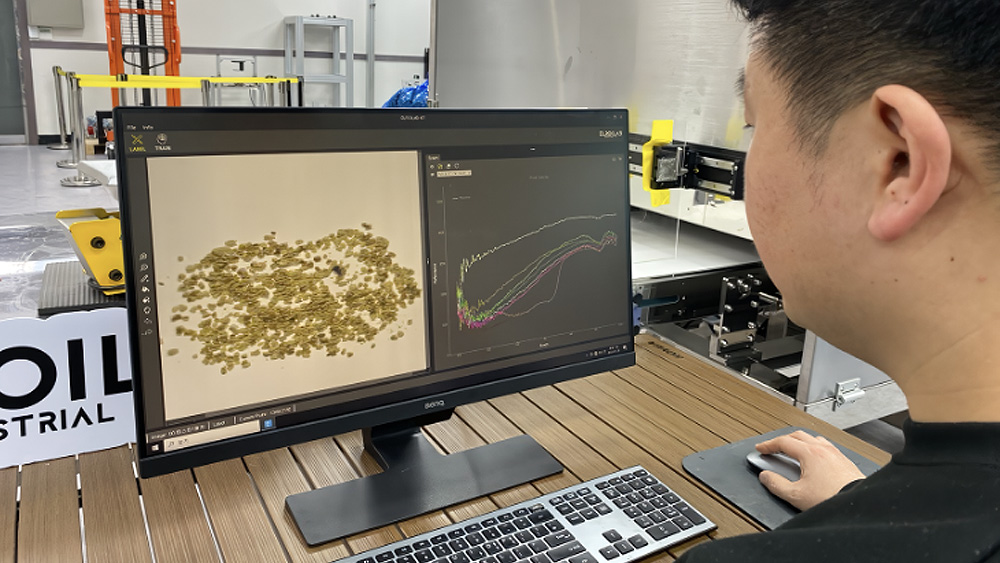
Image 3. Example of polymer classification using Specim FX50 hyperspectral imaging. Different polymer types, including PS, ABS, PE, PA and PC, can be distinguished based on their spectral characteristics
This makes hyperspectral imaging an enabling technology within a larger automated sorting process rather than the sorting mechanism itself.
Applications Beyond Black Plastics
The ability to identify materials according to their spectral characteristics makes MWIR hyperspectral imaging relevant to several recycling and material-sorting applications.
In automotive recycling, for example, components can contain multiple types of black polymers and rubbers that look similar but differ chemically.
Waste electrical and electronic equipment (WEEE) also contains numerous polymer types, including dark plastic housings and components.
Similar identification challenges can occur in other plastic waste streams where accurate polymer-type separation is important for subsequent processing.
In these applications, MWIR hyperspectral imaging can provide additional material information when visible imaging or conventional NIR methods do not provide sufficient differentiation.
Better Material Information for Recycling
Accurate identification is an important step toward producing well-defined material fractions for further processing.
MWIR hyperspectral imaging does not determine what ultimately happens to a material after sorting. However, by enabling difficult materials such as carbon-black plastics to be identified and separated according to polymer type, the technology can make these materials more accessible to subsequent recycling processes.
For system integrators and recycling technology providers, MWIR hyperspectral imaging therefore offers a way to extend optical sorting to materials that have traditionally been difficult to identify with NIR.
Bringing Material Intelligence to Machine Vision
Black plastics demonstrate why material information matters in industrial machine vision.
Two plastic objects may appear almost identical to a conventional camera while being made from completely different polymers. Hyperspectral imaging adds spectral information that allows the system to distinguish materials based on their chemical characteristics rather than appearance alone.
With its 2.7–5.3 µm spectral range and line-scan architecture, Specim FX50 brings MWIR material identification into industrial machine vision applications.
For black plastic sorting, this provides a practical way to address one of the limitations of conventional NIR-based optical identification and opens new possibilities for automated polymer classification and sorting.
About the authors
For media inquiries, please contact:
Harri Karppinen
Marketing Manager
Specim, Spectral Imaging Ltd.
Email: harri.karppinen@specim.com
For technical queries, please contact:
Mathieu Marmion
Lead Applications Specialist
Specim, Spectral Imaging
Email: mathieu.marmion@specim.com
Download White Paper:
Watch a Live Demo: