Executive Summary
Repsol Technology Lab has developed an advanced hyperspectral imaging solution that predicts both catalyst activity and particle size from a single optical scan. By combining Specim’s hyperspectral imaging technology with proprietary algorithms and AI models, the team has demonstrated laboratory-grade accuracy while dramatically reducing analysis time, laying the foundation for faster, data-driven process control in refinery environments. It also reduces reliance on time-consuming laboratory workflows.
The Challenge: Breaking the Laboratory Bottleneck
Fluid Catalytic Cracking (FCC) is one of the most critical processes in modern petroleum refining. Maintaining catalyst performance requires continuous monitoring of both its chemical activity and physical integrity, but traditionally these measurements have relied on separate laboratory workflows.
Catalytic activity is determined using the Micro Activity Test (MAT), a complex wet-chemistry procedure that can take days or even weeks to complete. Particle size (APS) is measured independently using laser diffraction, adding another instrument, another workflow, and another delay.
While these methods provide reliable results, they also create an operational bottleneck that limits the industry’s ability to move toward real-time Process Analytical Technology (PAT).
Instead of asking how these individual measurements could be improved, the Repsol team asked a different question:
What if everything could be measured at once?
The Solution: One Scan Instead of Many
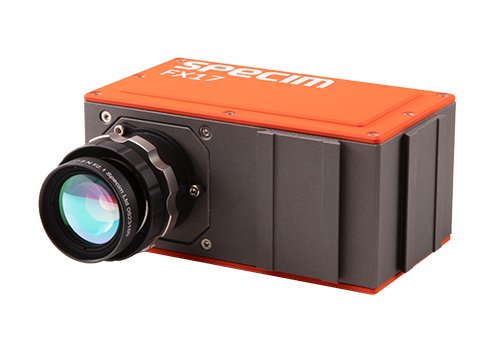
To answer that question, Repsol Technology Lab developed a proprietary methodology combining the Specim FX17 hyperspectral camera with advanced AI-driven predictive models.
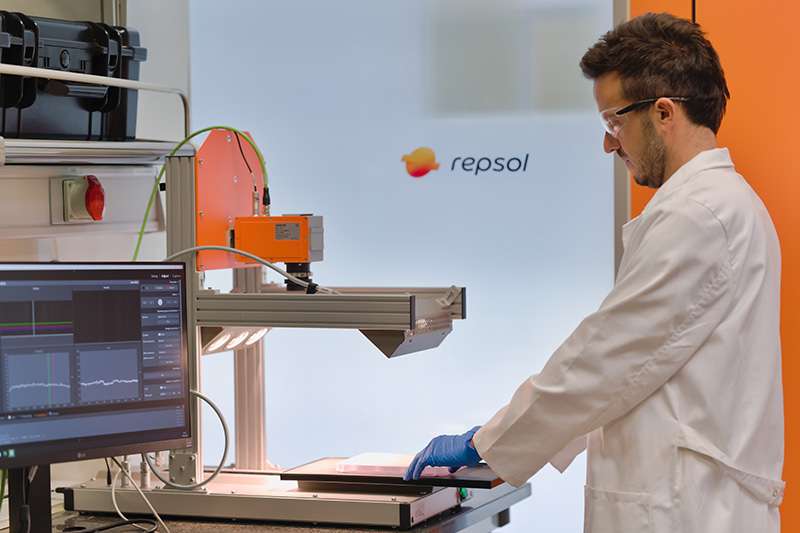
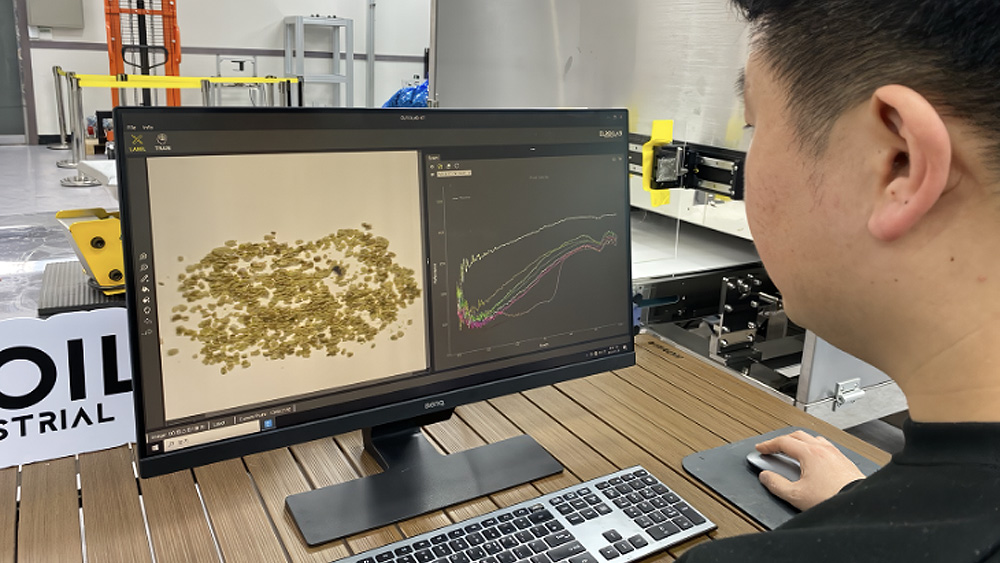
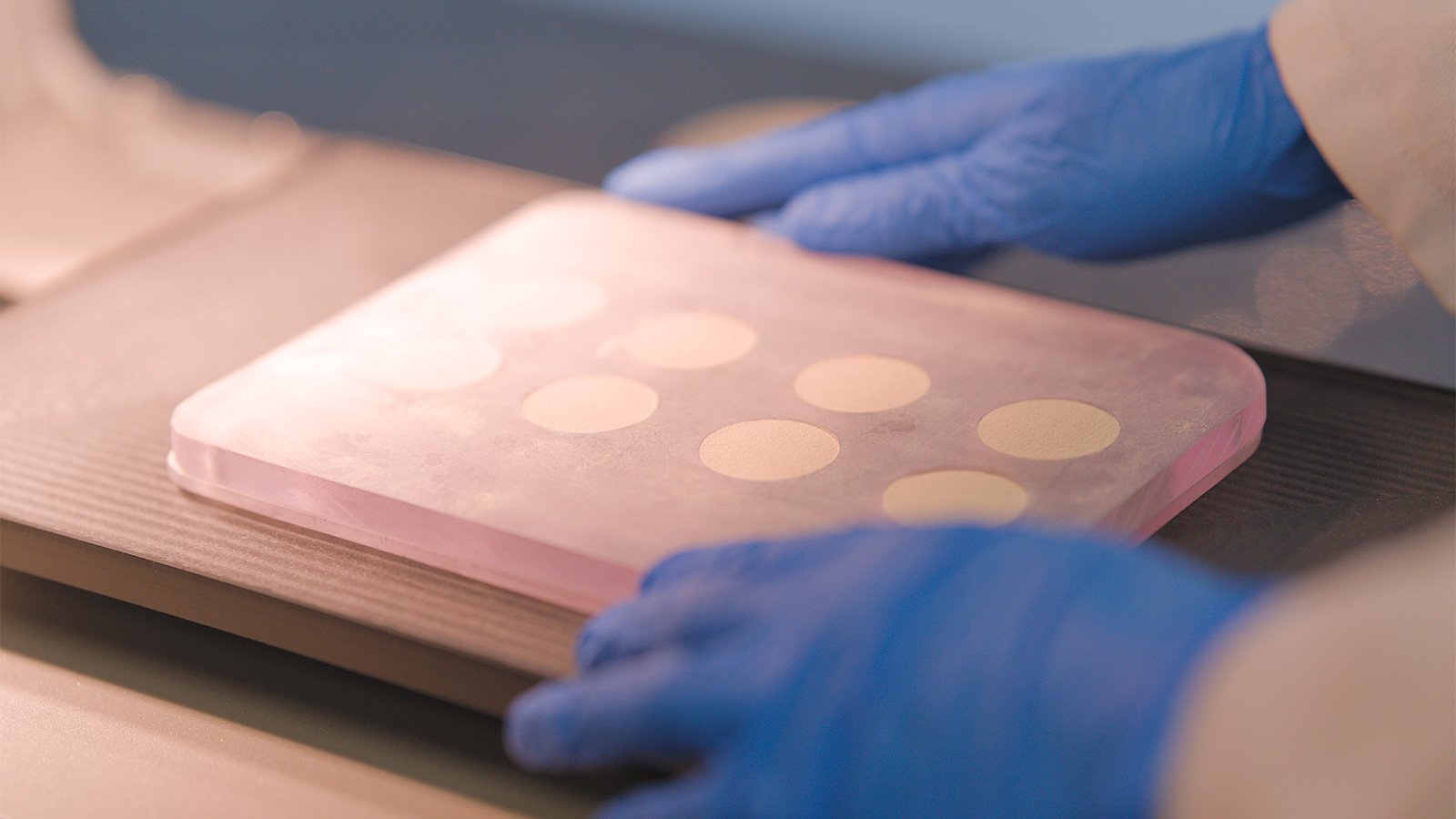
Using a single hyperspectral scan, the system captures detailed spectral information from FCC catalysts and simultaneously predicts both their chemical activity (MAT) and physical properties (APS). By analyzing both spectral signatures and spatial patterns within the hyperspectral dataset, the methodology extracts information that previously required slow and multiple independent laboratory techniques.
Rather than streamlining a single laboratory test, the approach enhances an entire fragmented workflow with a single optical measurement.

Results: Laboratory-Grade Accuracy from a Single Scan
The project demonstrated that hyperspectral imaging can accurately predict both catalyst activity and particle size from the same dataset.
Key results include:
- 0.4% average prediction error for catalytic activity (MAT)
- 2.4% maximum prediction error, comparable to the uncertainty of conventional laboratory methods
- ±3 μm prediction error for Average Particle Size (APS)
- Simultaneous prediction of multiple catalyst properties from a single optical scan
These results demonstrate that hyperspectral imaging can reliably streamline multiple laboratory measurements in a single step.
Business Impact: Faster Decisions, Better Process Control
The greatest value of the solution is not only its analytical accuracy, but the speed at which information becomes available. Instead of waiting days or even weeks for separate laboratory analyses, engineers can obtain multiple catalyst properties from a single optical scan performed close to the process. This enables faster operational decisions for potential online implementation, particularly in continuous refinery processes where delays in feedback can directly impact performance. It also supports more responsive process control and reduces dependence on fragmented laboratory workflows.
For refinery operators, faster catalyst characterization could mean improved process efficiency, better operational visibility, and greater confidence in production decisions.
Why Specim
For this approach to work, data quality and repeatability were critical. Repsol selected Specim based on the repeatability and reliability of its hyperspectral data, enabled by robust calibration and industrial-grade camera design. These qualities were essential for developing AI models capable of delivering consistent, laboratory-grade predictive performance.
Beyond the FX17 used in this project, Repsol also uses several Specim cameras across a range of industrial applications, reflecting the company’s confidence in Specim hyperspectral imaging solutions.
Beyond the hardware, Repsol highlights the open collaboration with Specim’s business and R&D teams, together with the technical expertise and integration support provided by Alava Ingenieros, as important contributors to the project’s success.
Looking Ahead
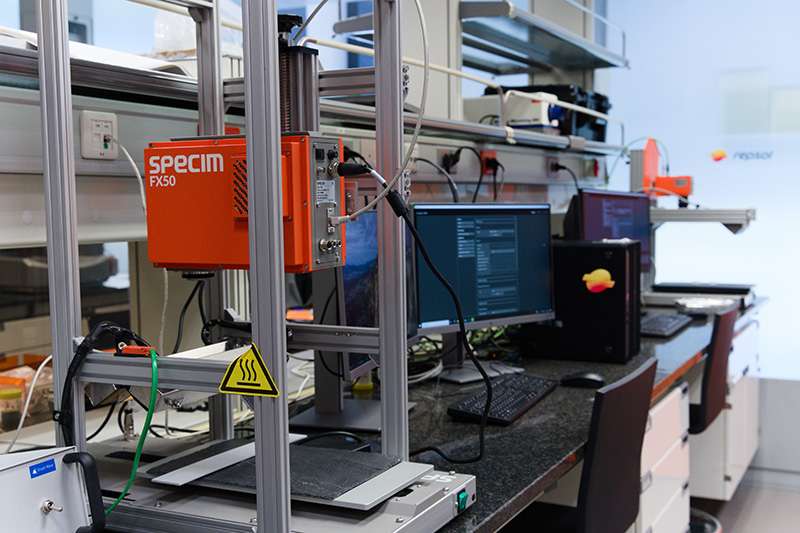
Although this work focuses on FCC catalysts, Repsol sees broader opportunities for hyperspectral imaging across industrial material characterization.
The long-term vision is to deploy on-site hyperspectral characterization capabilities throughout industrial facilities, enabling rapid analysis directly at the operational source. Beyond supporting Repsol’s own operations, the company also sees potential to extend these capabilities to third-party applications.
By demonstrating that multiple critical catalyst properties can be predicted from a single optical scan, Repsol is helping establish a faster, more efficient approach to industrial material characterization.